AI Legislative Guide: How to Prioritize AI in Your Legislative Agenda
Introduction
AI is an increasingly urgent issue for Americans. It’s also a complex, and at times, technical topic. How can lawmakers address AI in a way that serves their constituents?
At Center for Humane Technology, we clarify how AI works for the public and policymakers, and articulate solutions that prioritize the public’s interest. This AI Legislative Guide demystifies AI issues and covers the five most pressing challenges surrounding this technology — from AI job loss, to tech industry accountability, to how AI is impacting kids and teens. This guide then offers strategies for talking about AI in a way that connects with real people, along with framings for AI issues that are free of industry influence.
How Americans Feel About AI
First, it’s important to understand the shifting public sentiment around AI. Republicans and Democrats alike are equally concerned about AI in every day life. In fact, the majority of Americans say that AI development is moving too fast.

Americans express worry about AI replacing jobs
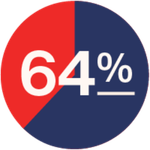
of Americans are pessimistic that AI will create economic gains that benefit everyone

Americans oppose the construction of a data center in their local area
Additionally, AI issues intersect with — and even worsen — the challenges already dominating Americans’ lives, including soaring prices, unemployment, and concerns about what the future holds. Workers are unsettled by AI job loss, communities are frustrated with rising energy bills from AI data centers, and parents are worried about what lies ahead for their children in the workforce and beyond. The public has a sense that this new technology isn’t happening for them, but at them, and during an already volatile time.
As a result, Americans increasingly want politicians to take action on AI:

of Americans want the White House to establish safety procedures for AI
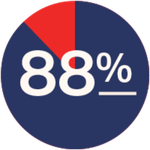
of Americans support AI safety testing for national security
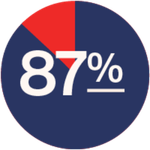
of Americans support safety testing for AI’s risks to kids and families
Top AI Issues
77% of Americans are concerned that AIdriven data centers will raise their electricity costs.
American communities often do not have a seat at the table when it comes to decisions around AI that stand to impact their job prospects, local communities, children’s prospects, and more — all while tech companies roll out AI at furious rates and shape a vision of the future that caters to their interests, not the public’s. Many Americans are thus presented with a vision of the future where their lives are upended by this technology and they have no power to respond. In situations such as data center buildouts, American communities and families are the ones bearing the ultimate financial, health-related, and communitybased costs — worsening their realities amid a mounting affordability crisis. The setup must be flipped. The public’s voice must be centered so that this technology is built in a way that reflects the public’s needs.
How to talk about it:
- AI innovation should happen with and for the public, rather than against it. Americans deserve a vision of an AI future they can feel excited about, a vision that speaks to their genuine needs, from stable work to affordable livelihoods.
- The American people deserve a say in how AI shapes their access to work, living wages, and economic security.
- A handful of companies — and a handful of powerful individuals within those companies — should not be the ones charting the course for America’s future. And the government should serve the will of the people, not the will of trillion-dollar tech companies.
What this looks like in practice:
- Understand (and heed) the public’s evolving sentiments around AI: The public has grown skeptical around claims that AI buildouts will create more jobs, and they are broadly distrustful of powerful tech companies. Part of offering constituents a seat at the table on these issues is establishing a genuine appreciation of their lived experience with AI — and their concerns.
- Government needs independent technical analysis: AI companies have mounted extensive lobbying efforts at both the state and federal level, yet their positions are increasingly at odds with the general public’s best interests. Industry-supplied analysis reflects industry interests; independent technical review is essential to evaluating these proposals on the merits.
Over 50% of Americans support taxing AI and paying workers displaced by AI.
Amid an already daunting affordability crisis, AI is contributing to broader destabilization for Americans — especially when it comes to their access to jobs. Leading AI companies are building systems that aim to replace entire categories of human labor across the economy, and there is no plan in place to support the people who will lose their jobs as a result of AI. Our existing social, economic, and political systems are not fit to withstand the consequences of the potential mass labor displacement. But a different reality is possible. American policymakers can meet the moment and ensure that we have AI — and an economy — that supports working Americans.
How to talk about it:
- The American Dream is rooted in upward mobility, and the opportunity for all people in this country to prosper through hard work and determination. But that upward mobility is endangered when AI replaces entry level jobs and limits middle class wages. We cannot allow AI — or AI companies — to undermine the fundamentals of the American Dream.
- Stable, meaningful work should be the bedrock of the American economy.
- We need to ensure not only that workers are trained and upskilled for the age of AI, but that human expertise remains prioritized as we integrate these tools across industries.
What solutions look like:
- Shape new tax incentives: Offer tax breaks to companies that retain workers and invest in upskilling, and ensure AI companies bear economic responsibility for job displacement.
- Set up meaningful retraining pipelines: Fund apprenticeship and residency-style workforce development pathways through state systems that connect directly to real jobs.
- Establish labor protections and resources for displaced workers: New protections should ensure that workers are able to access stable benefits and development resources as they navigate a turbulent labor market
A majority of Americans support AI regulation, including legal restrictions on AI.
In America, we have certain expectations for sound business practices. When a company fails to take basic steps to ensure their products liability is safe, they should be held accountable. But the tech industry continues to skirt these basic expectations.
Social media companies have long avoided accountability when their products harm our kids and communities. And now, the AI industry is rushing its own recklessly designed products out to the public. AI products are currently enabling nonconsensual intimate imagery (NCII), financial fraud schemes, traumatic cyberbullying, and more. And AI systems are at times producing unpredictable outputs to customers, leaving small and mid-sized businesses scrambling to address the fallout. American businesses, people, and even children are the collateral damage when these AI products cause harm — and the AI industry currently lacks binding legal mechanisms for accountability, such as product liability. Without binding mechanisms, AI companies will continue to deploy products to American consumers with their own market dominance — and not the public’s safety — as their priority
How to talk about it:
- If a poorly designed AI product damages people’s lives, the AI company needs to be held responsible.
- Americans don’t need vast, complicated regulation for AI in order for their lives to improve. We simply need AI companies to take clear, purposeful steps to prevent harm, and for there to be accountability when those steps aren’t taken. This is the kind of common-sense business practice we expect in America, and within American innovation.
- The “move fast and break things” era of the tech industry needs to come to an end, especially when it’s clear the things being broken are the livelihoods of working people and the mental health of our children. We can no longer allow these powerful companies to exploit legal loopholes and roll out products that prioritize the company’s dominance over the public’s well-being
What solutions look like:
- Support measures that legally clarify that AI is a product: By enshrining that AI is, in fact, a product, a foundation is laid for a products liability approach to AI regulation. This incentivizes greater accountability in the AI industry overall.
- Develop new duties for AI developers: AI developers should owe a fundamental duty of care to protect their customers and the the public at large from the foreseeable risks of their products.
87% of Americans support safety testing for AI’s risks to kids and families.
AI companies are designing their most popular products, such as chatbots, with manipulative, human-like features — and kids are using them at soaring rates. These features (where a chatbot, often positioned as an “always there” friend, replies with human-like text, sycophantic feedback, and emotional expression) aren’t inevitable on AI; they’re purposeful design choices made by developers in order to keep people coming back to their products, driving dependency, compulsive engagement, and mental health crises. Kids and teens are particularly susceptible to these manipulative designs, and are turning to these chatbots for homework help, companionship, and more. Just a few years into the “age of AI,” we’ve seen children including Sewell Setzer III and Adam Raine be manipulated by predatory chatbots and coached through self-harm and suicide. OpenAI’s own research estimates that hundreds of thousands of users show signs of mania, psychosis, and other mental health emergencies while using the platform each week. Per a recent APA health advisory, AI chatbots already engage in unsafe interactions with vulnerable users, including children, encouraging self-harm and aggressive behavior. These highrisk AI design choices need to be addressed immediately, especially when it comes to kids and teens.
How to talk about it:
- Today’s most popular AI products aren’t being designed by AI companies to support our well-being. They’re being built with manipulative design features to keep us using the product as much as possible, and enrich these AI companies with data and profits. This exploitation has to stop. We need AI products that center the public good, and especially the well-being of our kids and teens.
- AI chatbots have been the wild, wild west for the last three and a half years, with companies prioritizing engagement and intimacy over the well-being of their users. This is an escalating issue. We need clear design standards that outline the ways in which AI companies can mitigate the psychosocial and development harms from AI chatbots, such as limiting sycophancy, employing responsible data practices, and constraining the use of engagement-maximizing features with minors.
- As we saw with social media, designs that try to drive more and more engagement have a poor track record; society ends up lonelier and more polarized when we're all being manipulated by digital technology. But AI chatbots aren't just after engagement — they're after attachment and intimacy, too, including with kids and teens. Already, academic and even AI company research is showing that manipulative, human-like designs lead to negative outcomes for users. It's time for AI companies to put meaningful safeguards on these features, and restrict access to them for minors.
What solutions look like:
- Support standards for AI development: Treat AI standards as a floor for safety, and provide developers with concrete steps to mitigate risks.
- Enshrine protections for kids: Recognize the acute vulnerabilities that children possess, and advocate for higher levels of product scrutiny and safeguards to shield children from design elements that are known to be harmful (i.e. human-like design, addictive features, etc.)
- Clarify requirements for high-risk AI use cases: If AI is to be used in high-risk environments (such as therapeutic contexts), require it to undergo rigorous testing and evaluation, and operate under the supervision of licensed professionals. Requirements should also employ researchbacked methods for harm mitigation.
Americans on both sides of the aisle broadly support AI safeguards, standards, and oversight.
AI companies are developing powerful systems with a range of troubling capabilities, including the ability to outsmart leading cybersecurity experts (Claude Mythos), manipulate ordinary Americans (ChatGPT), and upend the U.S. economy (AI systems, broadly). And the development of these systems is happening in secret, without oversight — or real say — from the public, government, or safety experts.
What’s more, these companies continue to cut corners on safety and even outright drop their promised safety protocols amid growing market competition. This has created a dangerous information asymmetry between AI companies and the public, and heightened the risk of catastrophic scenarios with AI systems. The public cannot adequately prepare for dangers it is unaware of.
How to talk about it:
- AI companies have shown they cannot be trusted to “grade their own homework” when it comes to necessary AI guardrails and reporting. Instead of relying on AI companies to self-report their safety updates, we need independent auditing and standardized reporting across the AI industry in order to keep these companies in check.
- Employees at AI companies know the most about these powerful AI products and systems — yet they are staying silent about their concerns due to punishing NDAs. People inside companies are the earliest warning system for AI harms. We need whistleblower protections in the AI industry to support the individuals who bravely step forward to raise concerns about AI development practices in real time.
- Cars have safety standards for their design. They include working brakes, airbags, and seatbelts. The AI products that our businesses, colleagues, children, and critical infrastructure plan to use each day should be subject to the same expectation — design standards, mandatory safety testing, and independent oversight. We need to make sure these products are truly built with the public’s safety in mind.
What solutions look like:
- Require mandatory predeployment testing and risk management: End the cycle of AI companies unleashing untested products on the public by establishing mandatory testing and risk management before these systems reach our businesses and homes.
- Enshrine whistleblower protections for AI employees: Protect the employees with unique insight into AI companies and systems, allowing them to speak out through safe channels without fear of life-altering retaliation.
- Support the development of independent audit and certification schemes: Adapt the independent oversight mechanisms that exist in other industries (such as the financial sector and consumer product safety) so that we no longer just rely on AI companies voluntarily assessing their own safety protocols.
Center for Humane Technology (CHT) is a nonprofit organization whose mission is to realign the most consequential technologies with humanity’s best interests. As a part of this, CHT offers our expertise to policymakers, governments, legal teams, and other key stakeholders. Our policy work ranges from supporting legislation and litigation, to participating in high-level discussions with lawmakers, to consulting for government institutions.
CHT is a public charity formed under section 501(c)(3) of the Internal Revenue Code. As such, CHT does not support or oppose any political candidate or party, and does not otherwise directly or indirectly intervene in political campaigns in support of or opposition to candidates for public office.
To learn more about CHT’s detailed solutions, read our “AI Roadmap” or reach out to policy@humanetech.com.
